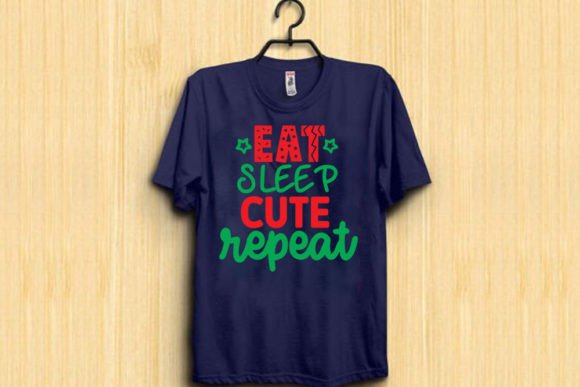
BABY- T-shart Design: A Practical Review
As a designer who has spent countless hours staring at digitizing software and watching needles dance across fabric, I have learned that not all digital embroidery file assets are created equal. Some are merely decorative clutter, while others possess the structural integrity and visual charm necessary to become a staple in a craft business. Today, I am taking a close look at BABY- T-shart Design, Eat Sleep Cute Rep. This piece falls under the category of Freebies and Graphics, but do not let the price tag fool you into thinking it lacks professional potential. I evaluated this design with the intent of using it for real client projects, specifically focusing on how it translates from screen to stitch.
First Impressions and Visual Personality
When I first opened the preview for BABY- T-shart Design, Eat Sleep Cute Rep, the immediate mood was playful yet structured. The phrase "Eat sleep cute repeat" suggests a whimsical narrative, likely targeting the nursery or baby apparel market. However, the execution matters more than the slogan. The layout appears balanced, avoiding the common pitfall of overcrowded text that becomes illegible once stitched out. For an embroidery designer, the spacing between letters is critical. If the kerning is too tight, the threads will merge; too loose, and the message loses cohesion. This design seems to strike a reasonable balance, offering a clean aesthetic that feels modern rather than dated.
The visual personality here is soft and approachable. It does not rely on aggressive boldness but rather on a friendly demeanor. This makes it an excellent candidate for a personalized gift or a boutique baby item. When considering a machine embroidery design for commercial use, we must ask: does it look expensive? Does it look handmade with care? This design leans toward the latter, providing that artisanal touch that Etsy sellers and small shop owners strive to achieve.
Real-World Application: The Baby Onesie Test
To truly understand the value of this asset, I imagined a specific scenario: a custom order for a baby shower gift. The client wanted a set of three onesies and a matching tote bag. I selected BABY- T-shart Design, Eat Sleep Cute Rep for the primary onesie. The theme fits perfectly with baby embroidery projects, where cuteness is the primary currency.
In this context, the design serves as the focal point. Because it is a text-based graphic with likely simple graphical elements, it avoids the bulkiness that can irritate a baby’s sensitive skin. Unlike dense fill stitch areas that can feel stiff, this design likely utilizes a mix of satin stitch for borders or small details and potentially running stitch for finer lines, depending on the digitization. This combination ensures the finished product remains soft and flexible, which is crucial for custom apparel intended for infants.
Beyond baby clothes, this design has versatility. It would work exceptionally well on a tote bag design for a young mother, adding a touch of humor to her daily essentials. It could also be scaled down for an embroidered patch on a denim jacket or a canvas cap. The adaptability of the design allows it to cross over from nursery decor to everyday fashion, increasing its utility for a craft business looking to maximize their design assets.
Technical Considerations and Stitching Clarity
While the aesthetic is appealing, the technical execution determines whether a project succeeds or fails. One must consider stitch density. If the design is too dense, it will pucker lightweight fabrics like cotton jersey or muslin. If it is too sparse, the background fabric will show through, ruining the visual impact. Since this is provided as part of a ZIP file containing EPS, SVG, PNG, and DXF files, it is important to note that these are primarily vector and raster graphics formats.
Important Note for Embroiderers: The inclusion of EPS, SVG, PNG, and DXF files suggests this product may be intended for cutting machines (like Cricut or Silhouette) or print-on-demand services rather than direct machine embroidery stitching formats (such as PES, DST, or JEF). If you intend to use this for commercial embroidery on a sewing machine, you must verify if actual embroidery file formats are included or if you need to convert these graphics. If conversion is required, pay close attention to how the software interprets the curves. Auto-digitizing often results in poor stitch density management. Always inspect the stitch path manually before sending it to the machine.
For those using it as a printed graphic or cut vinyl applique, the clarity of the PNG and SVG files is vital. The edges must be crisp. Blurry edges in a printable mockup or final print look unprofessional. The design should hold up well against various thread colors or ink choices. I recommend testing the design in black and white first to ensure the contrast is sufficient. If the details disappear in monochrome, they will likely get lost on busy fabric texture backgrounds.
Fabric and Hoop Size Constraints
Placement is everything. For a sweatshirt embroidery project, the chest area provides ample space. However, if you are working with a smaller hoop size, such as a 4x4 inch hoop for a pocket detail, you must ensure the design scales down without losing legibility. Tiny lettering can become a tangled mess of thread if the scale is too small.
Textured fabrics present another challenge. On a terry cloth towel or a fuzzy fleece blanket, fine details can get swallowed by the pile. In such cases, using a proper stabilizer is non-negotiable. A cut-away stabilizer might be necessary for stretchy fabrics to prevent distortion after washing. For woven fabrics like aprons or pillow covers, a tear-away stabilizer may suffice, but always test on scrap fabric first. This step saves time and materials in the long run, protecting your reputation as a reliable Etsy seller.
Commercial Viability and Brand Consistency
For small business merchandise, consistency is key. Using BABY- T-shart Design, Eat Sleep Cute Rep across different product lines can help build brand recognition. Imagine a boutique that specializes in cozy, cute home goods. This design could appear on kitchen towels, pillow covers, and baby bibs, creating a cohesive collection.
However, before selling any handmade product featuring this design, you must confirm the licensing terms. Just because it is listed under Freebies does not automatically grant commercial rights. Check the documentation included in the ZIP file. If commercial use is permitted, this design becomes a valuable design asset that can generate revenue with minimal overhead. If it is for personal use only, it remains a lovely option for making gifts for friends and family, enhancing the sentimental value of your holiday embroidery projects.
Final Verdict for Designers
In summary, BABY- T-shart Design, Eat Sleep Cute Rep offers a charming aesthetic that fits well within the current trends of nursery and lifestyle decor. Its strength lies in its simplicity and emotional appeal. However, the technical workflow requires careful attention, particularly regarding file format compatibility for embroidery machines.
For creative entrepreneurs and hobbyists, this design serves as a solid foundation for various projects, from custom apparel to home accents. By respecting the limitations of fabric and machinery, and by verifying license permissions, you can transform this digital graphic into a tangible, high-quality product that customers will love. Always prioritize testing, adjust your thread colors to suit your brand palette, and let the design speak for itself through clean, precise stitching.