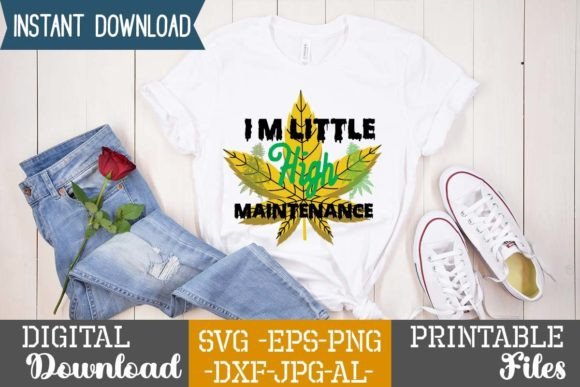
Reviewing I m Little High Maintenance for Embroidery
As a designer who has spent countless hours digitizing and stitching out thousands of patterns, I have learned that the personality of a design often matters more than its technical complexity. When I first encountered I m Little High Maintenance, my immediate reaction was not just about the aesthetics, but about the attitude it projects. This piece falls under the category of Freebies and Graphics, which immediately raises questions about its utility in professional settings. Is it merely a cute digital asset, or does it hold up when translated into thread on fabric? After evaluating its potential for real-world application, I am ready to share my practical insights for fellow embroidery designers, Etsy sellers, and craft entrepreneurs.
The Visual Personality and First Impressions
The phrase itself carries a specific cultural weight. It is playful, slightly self-deprecating, and undeniably trendy. Visually, this type of typography-driven design relies heavily on balance and legibility. In my initial assessment, I looked at how the layout would translate from a screen to a hoop. Designs that are too dense or have intricate serifs often lose their charm when stitched out, especially if the stitch density is not optimized for the target fabric. For I m Little High Maintenance, the appeal lies in its clarity. It feels like a statement piece meant to be seen, making it an excellent candidate for items where the text is the focal point rather than a subtle accent.
When considering the mood, this design exudes confidence. It is not shy. This makes it perfect for customers who want their handmade product to speak for them. Whether it is for a personalized gift or a item for your own boutique, the design commands attention without being overly aggressive. It fits seamlessly into the current trend of witty, text-based apparel that dominates social media feeds and online marketplaces.
Real-World Application Scenarios
To truly understand the value of any machine embroidery design, you must visualize it in use. I imagined stitching this onto a high-quality cotton tote bag. The contrast of bold thread against a natural canvas creates a chic, minimalist look that appeals to a broad demographic. Here, the design serves as both decoration and branding. For an Etsy seller, this could be a quick-turnaround item that requires minimal setup but offers high perceived value.
Another strong contender is sweatshirt embroidery. A crewneck sweatshirt provides a stable, flat surface that is ideal for text-based designs. The thickness of the fabric supports the stitches well, preventing puckering if the correct stabilizer is used. Imagine this design placed centrally on the chest or slightly off-center for a modern aesthetic. It transforms a basic garment into a custom apparel piece that feels exclusive and tailored. Similarly, for baby embroidery, one might consider scaling it down for a onesie, though the tone might need to be softened with pastel thread colors to suit the nursery vibe.
I also considered its use on an embroidered patch. Patches are versatile; they can be ironed onto jackets, bags, or hats later. Using this design for a patch allows customers to customize their existing wardrobe, adding a layer of interactivity to your small shop product. However, patches require precise cutting and often benefit from a satin stitch border to keep edges clean, so you must ensure the digital file supports such modifications.
Technical Considerations and Fabric Challenges
While the concept is strong, the execution depends entirely on the technical specs of the file. Since the product description notes that this is a DIGITAL DOWNLOAD ONLY containing a SVG-1 Digital cut file and an EPS-1 file, we must address a critical distinction. These are vector graphics formats typically used for cutting machines like Cricut or Silhouette, not native machine embroidery formats like PES or DST. This means that if you intend to use this for commercial embroidery on a sewing machine, you will likely need to convert these vectors into an embroidery file using digitizing software, or use them as a template for applique.
If you are using this as an applique design, the SVG works perfectly. You can cut the shape from fabric and stitch it down. This method reduces stitch density on the garment, making it softer and more comfortable, which is crucial for baby clothes or sensitive skin. However, if you plan to digitize it yourself for a fill stitch or satin stitch approach, pay close attention to the letter spacing. Tiny details in fonts can merge together if the stitches are too dense or if the needle jumps are not managed correctly.
Fabric choice is paramount. On textured fabrics like terry cloth towels or fuzzy fleece, small text can get lost. For a tea towel or kitchen towel, I would recommend increasing the size of the design significantly to ensure readability. Conversely, on smooth, tightly woven cottons or poly-blends, the design will shine with crisp edges. Always test on scrap fabric first. Check how the thread colors interact with the background. A dark thread on a dark fabric may lack contrast, ruining the impact of the message.
Commercial Viability and Brand Consistency
For craft business owners, consistency is key. Does I m Little High Maintenance fit your brand voice? If your shop focuses on elegant, minimalist wedding gifts, this witty phrase might clash. However, if your brand is fun, youthful, and geared towards millennials or Gen Z, it is a perfect fit. It enhances buyer engagement because it invites a reaction. People love to share products that reflect their personality on social media, which provides free marketing for your finished product.
When creating printable mockup images for your online listings, ensure the design looks realistic. Use lighting and shadows that mimic real thread texture. This builds customer trust and sets accurate expectations. Remember, since this is listed under Freebies, verify the licensing terms carefully. Some free graphics are for personal use only, while others allow commercial use. Never assume. Confirm whether you can sell items made with this design before listing them in your store. Protecting your design assets and respecting intellectual property is part of maintaining professionalism in the industry.
Final Designer Notes
Before launching any project with this design, run through a checklist. Confirm the hoop size required for your intended item. Ensure your stabilizer matches the fabric weight—cut-away for stretchy knits, tear-away for stable wovens. If converting from SVG, check the node count to avoid unnecessary stitch jumps. Test different thread colors to find the best contrast. And always, always stitch out a test sample. A failed stitch-out on a final garment costs time and money; a test on scrap saves both.
In conclusion, I m Little High Maintenance is a versatile graphic with strong potential for various embroidery project types. Its success lies not just in the words, but in how thoughtfully you apply it to the right medium. With careful attention to technical details and brand alignment, it can become a standout item in your portfolio, driving sales and delighting customers who appreciate a touch of humor in their daily wear.